
Thursday, June 11th
1:30 pm to 2:30 pm
Activity open to individuals registered for the Forum.
Choice 1 :
Working Together to Promote Indigenous Knowledge, Realities and Perspectives in Teacher Education, Psychoeducation and Social Work
ÉdUQACtion
This workshop presents a collaborative process developed through an innovative project (Ministère de l’Enseignement supérieur, 2024–2025) aimed at creating an approach to better integrate Indigenous knowledge, realities and perspectives into training programs in teaching, psychoeducation and social work. Grounded in mutual respect and recognition of expertise, this work is part of a co-creation process with First Peoples (Kaine et al., 2016). Participants will learn how First Peoples experts and university educators worked together to develop an approach that prepares professionals to better support First Nations youth and families, while also empowering Indigenous professionals to take pride in transmitting their language and culture, in line with Competency 15 (FNEC, Institut Tshakapesh, CFMD Huron-Wendat, 2021). The session will also provide an opportunity to explore resources developed in collaboration with First Peoples partners.
To all First Peoples students and professionals who shared their knowledge and experiences: tshinashkumitnau, miigwetch, miigwech, nakurmiik!
Thank you as well to the educators who contributed their questions, reflections and initiatives!
The innovative project focused on mobilizing Indigenous knowledge, realities, and perspectives in training programs in education, psychoeducation, and social work was carried out under the shared leadership of: Christine Couture, a professor involved in projects supporting the retention and success of First Peoples students at UQAC; Danielle Rousselot, Director of the Nikanite First Nations Centre and Relations with First Nations; Julie Rock Katshishkutamatshesht, Professor of Indigenous Realities and Psychosocial Intervention at UQTR; Émilie Hébert-Houle, an education specialist at UQTR’s Bureau de relations et de l’engagement avec les Premiers Peuples; Sammy Kistabish, a teacher at Centre régional d’éducation des adultes Kitci-Amik in Pikogan; Glorya Pellerin, a professor at UQAT and leader of the research and collaboration team in Indigenous educational contexts (ÉDRACCÉA).
In collaboration with: Jean-François Vachon, Marilyne Soucy and Emmanuelle Aurousseau (Boîte Rouge Vif), Manouchka Otis (Institut Tshakapesh), Kehoe Picard (UQAC), Marion Larose (UQTR), Véronique Paul (UQAT), Samuel Rainville (UQTR)
Christine Couture
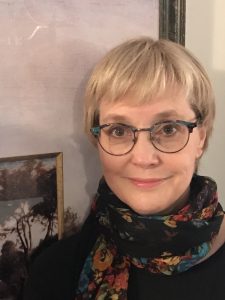
Christine Couture, a professor in the Department of Educational Sciences and a researcher at the UNESCO Chair in Cultural Transmission Among First Peoples, has worked to document, through a collaborative research approach, the development of practices to support the success of Indigenous students in the Petapan project (2017–2020), as well as in a concerted action research project on cultural safety (FRQSC 2020–2024).
She continues this work in an innovative project (MES 2024–2026 – UQAC, UQTR, UQAT) focused on mobilizing Indigenous knowledge, realities, and perspectives within training programs in education, psychoeducation, and social work.
She also develops knowledge transfer tools through a co-creation approach in collaboration with La Boîte Rouge VIF.
Julie Rock
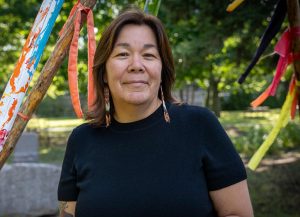
Julie Rock is an Innu from Uashat mak Mani-utenam and a member of the Pekuakamiulnuatsh First Nation. Known as Katshishkutamatsheshkueu, she is a professor of Indigenous realities and psychosocial intervention in the Department of Psychoeducation and Social Work at Université du Québec à Trois-Rivières (UQTR). She is also a doctoral candidate in education, and in her thesis she examines cultural safety practices designed to support school perseverance and success for Indigenous students within community-based vocational training programs. Professor Rock has extensive professional experience in developing and implementing programs and services for First Nations communities. Throughout her career, she has built deep expertise and knowledge in social intervention, administration, and education within these communities.
Émilie Hébert-Houle
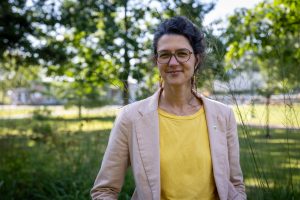
Trained as a geographer and working in Indigenous contexts since 2009, Emilie leads the Indigenous Education Strategy within UQTR’s 2025–2027 Indigenous Strategic Plan. She brings her expertise in strategic thinking, project management, and program and policy development to advance decolonization, Indigenization, and reconciliation in institutions by, for, and with First Peoples. She advocates for a holistic approach grounded in territories and their ancestral knowledge.
Choice 2 :
Collaborating Differently: Archaeology, Knowledge and Reconciliation
Mamuitum Auditorium
Over the past 30 years, the Université du Québec à Chicoutimi History and Archaeology Laboratory and the Société d’histoire et d’archéologie de Mashteuiatsh (SHAM) have built lasting ties by working side by side on various archaeological initiatives. In a spirit of sharing and promoting knowledge, these projects are paving the way for renewed and balanced collaboration. This presentation will offer an opportunity to revisit these initiatives and reflect on their role in the reconciliation and empowerment process by fostering respectful, equitable, and sustainable relationships between Indigenous communities and researchers.
Érik Langevin
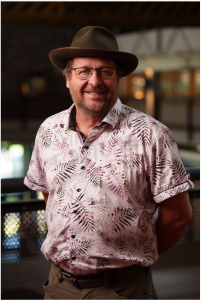 Érik Langevin is a professor of archaeology and Director of the Laboratory of History and Archaeology at the Université du Québec à Chicoutimi (LHASO), as well as Co‑Director of Teshipitakan, a multidisciplinary chair for training and research in Indigenous contexts. Alongside his teaching at UQAC since 1987 in ancient history, anthropology, and archaeology, he conducts numerous annual research projects focused on the Paleohistory and ancient history of First Nations. More specifically, Érik Langevin’s research interests include issues of identity and ethnicity in archaeology, as well as the application of geomatics methods to archaeological research. In addition to his academic work, he collaborates with numerous museum institutions in the Saguenay–Lac‑Saint‑Jean and Haute‑Côte‑Nord regions.
Hélèna Delaunière
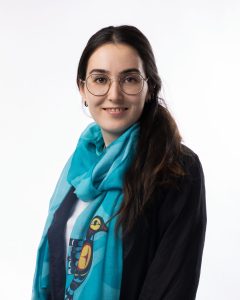 Hélène holds a Bachelor’s degree in History and a Certificate in Archaeology from the Université du Québec and has been actively involved in the fields of research and heritage for years. Since 2018, she has contributed to a variety of projects for the Société d’histoire et d’archéologie de Mashteuiatsh (SHAM), including three archaeological excavations in collaboration with UQAC. She has served as SHAM’s Head of Research Services since 2023.
Noémie Plourde
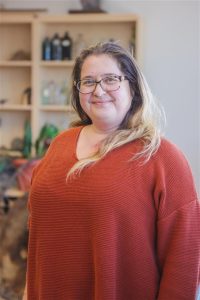 Noémie Plourde has been working in the field of regional archaeology since 2012. She holds a Bachelor of History, a Certificate in Archaeology, and a Master of Regional Studies and Intervention, and is currently pursuing a self-directed PhD in archaeology. Bringing a deep commitment to her field, she teaches the intricacies of archaeological practice as a lecturer at UQAC. Drawing on her significant field experience, she works with regional communities on a variety of archaeological projects.

