
Wednesday, June 10th
1:30 pm to 3:30 pm
Paul-Émile-Boulet Library – Shaputuan – ÉdUQACtion
Activity open to individuals registered for the Forum.
At the intersection of a Living Library and a sharing circle, Indigenous students and Elders from First Nations take the floor as “human books.” Through their stories, they share their relationships to education, their learning experiences, and their aspirations, bringing forward multiple perspectives deeply rooted in their journeys.
In an atmosphere of attentive listening and respect, these stories create a space for reflection and dialogue, which then continues in a sharing circle where each participant is invited to express what these voices and stories have stirred within them.
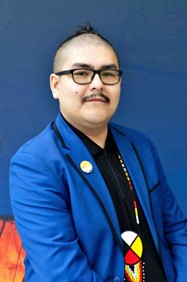 Bradley Bacon
Bradley Bacon is a member of the Innu community of Unamen Shipu, in Quebec, recognized for his commitment to youth, culture, and community development. From the age of 16, he became actively involved in his community, first serving as a mass assistant and later as an interpreter for the parish priest, thereby developing a strong sense of leadership and service to his people.
Over the years, Bradley has distinguished himself through his involvement in several community and cultural initiatives. As a spokesperson for the First Nations Youth Network, he gained notable recognition through the documentary Leaving for School (Partir pour l’école), produced with Wapikoni Mobile in 2013. He also contributed to a community newspaper project as editor-in-chief, with the goal of raising awareness among Innu youth about the importance of education, school perseverance, and social engagement.
An Innu translator and interpreter, Bradley now works to provide various services to members of his community through his consulting practice. Inspired by his father, a former band leader, he seeks to encourage young people to believe in their potential, pursue their studies, and become more involved in their communities in order to help build a stronger and more inclusive future for coming generations.
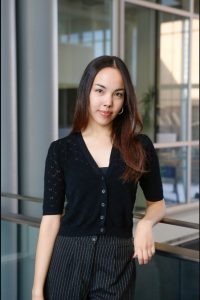 Leticia-Uasheiau Bacon
A Pekuakamiulnu from Mashteuiatsh, Leticia-Uasheiau Bacon is Cultural Safety Coordinator at the Vice-Rectorate for Community Engagement, International Affairs and First Peoples at the Université de Montréal. After growing up in her community, she developed a strong interest in people and how they think, leading her to complete a bachelor’s degree in psychology. Helping others has always been central to her path. Aware of the challenges faced by First Peoples, she aims to improve their experience during and after their studies. Since 2024, she has supported Indigenous graduates through the McConnell Foundation’s Indigenous Leadership Program, which helps them integrate into the workforce by matching them with workplaces also supported in cultural safety.
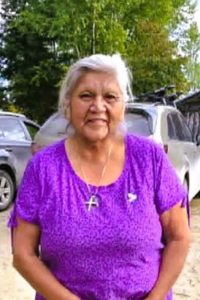 Lucie Basile
Lucie Basile is an Atikamekw woman from Wemotaci. She spent her early years on the land, Notcimik, before attending residential schools in Saint‑Marc‑de‑Figuery and Pointe‑Bleue for eleven years. She then studied secretarial work in Chicoutimi and at Manitou College. In 1982, she helped establish the Atikamekw Nation Council in La Tuque. She served ten years with the Quebec Native Women association, worked as a medical and court interpreter, and helped develop terminology tools. The first Atikamekw woman to run for chief and Grand Chief, she also supported the Elders’ Home project in Wemotaci.
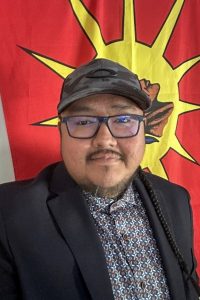 Dave Cleary
Originally from the Atikamekw community of Obedjiwan, Dave Cleary is a Kiuna College graduate and is currently pursuing a bachelor’s degree in psychoeducation at the Université du Québec à Trois-Rivières. Highly involved in university life, he serves as president of the Indigenous Students’ Association at UQTR. Guided by the teachings of Elders, he bridges oral traditional knowledge with academic learning through a holistic Indigenous approach. Open-minded and thoughtful, he is also interested in research and explores poetic writing, inspired by a deep connection to his spirituality.
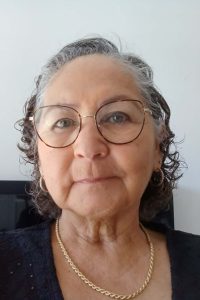 Jacinthe Connolly
Jacinthe Connolly, an Ilnu from Mashteuiatsh, has been committed for over 35 years to the “Red Road,” a path of reconnection to cultural and spiritual practices. After turning her life around in 1992, she returned to school and earned a college diploma in special education in 1996, dedicating 25 years of her career to Indigenous communities.
With extensive experience in helping relationships, she has supported a wide range of individuals: youth in difficulty, women experiencing domestic violence, people in the justice system, adults struggling with substance abuse, as well as residential school survivors and their families. Her approach makes support a true vehicle for transmission and healing, particularly in the context of the Truth and Reconciliation Commission.
In retirement, she remains highly active in advocating for Indigenous rights. She is involved in the first Indigenous users’ committee of the CIUSSS Domaine-du-Roy, created following the Joyce Echaquan case. She works to end injustices (residential schools, racism, missing and murdered Indigenous women and girls) and emphasizes the importance of education in fostering reconciliation. In 2025, she brought this vision to the international stage at a G7 preparatory meeting. She continues her commitment today through cultural safety initiatives with Indigenous students at Cégep d’Alma.
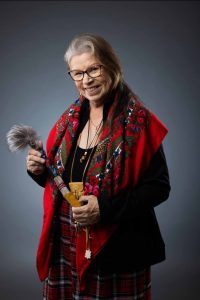 Germaine Dubé‑Courtois
An Atikamekw woman born in Manawan, Germaine Dubé Courtois carries within her the living memory of her people, shaped by hardship and resilience. Now a great-grandmother, she attended the Pointe-Bleue residential school in Mashteuiatsh, where her language was forbidden before she later reclaimed it and continues to speak it with pride. Love brought her back to Mashteuiatsh, to this same land rich in history, where she continued her healing journey. A committed craftswoman, she also earned a college certificate in social work at the age of 67, persevering in her desire to help her community. Her life journey reflects a deep commitment to transmission, rooted in a long path of healing and cultural reclamation. We welcome her with respect, listening to her voice and to what she wishes to share with us today.
 Zednick Fontaine Jourdain
A member of the Innu community of Uashat mak Mani-Utenam, Zednick Fontaine Jourdain is a student pursuing a bachelor’s degree in psychology at the Université du Québec à Chicoutimi (UQAC). Driven by a strong interest in helping relationships, he is particularly focused on the well-being and development of children and adolescents. Having grown up in his community, he has been shaped by traditional Innu values such as sharing, mutual support, respect, and the importance of community bonds. These values continue to guide his personal and professional path.
Actively involved in his community, Zednick currently works as a project coordinator for a day camp designed for children with special needs. He has a strong interest in developing resources and services aimed at supporting individuals in their personal and social journeys. Sensitive to mental health issues, he aspires to help improve access to services and to make a positive difference within communities by promoting well-being and support.
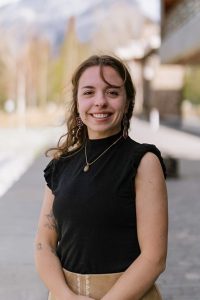 Emilie Fortin
A Québécoise and Ilnu from Mashteuiatsh, Émilie Fortin is a physiotherapist who holds bachelor’s and master’s degrees in physiotherapy from the Université du Québec à Chicoutimi. She is currently pursuing a tailored PhD focused on developing nature-based (or nature-supported) interventions for chronic pain management in Indigenous and non-Indigenous contexts. Her work is distinguished by an integrative approach that brings together Indigenous and Western knowledge systems. Guided by a deep respect for land, culture, and all living beings, she is interested in holistic health and the connections between physical, emotional, mental, and spiritual well-being. A member of the Indigenous Emerging Researchers Network in Health (ERRSA‑Qc) and the Environmental Physiotherapy Association, she is committed to advancing more relational, culturally grounded care practices.
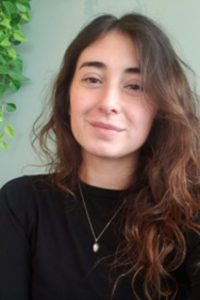 Andréa Tremblay
Andréa Tremblay holds a bachelor’s degree in history from the Université de Sherbrooke and is currently a graduate student in history at the Université du Québec à Chicoutimi. A member of the Pekuakamiulnuatsh First Nation, she has been interested in her community’s material heritage for several years and chose to make it the focus of her master’s research. Her interest developed through her learning of Ilnu culture while working at her community’s museum. Having not received these teachings during her youth, this opportunity to interact with both Elders and younger people allowed her to better understand the ways of being and the know-how that form the foundations of Ilnu culture.

