
Thursday, June 11th
3:30 pm to à 4:30 pm
Mamuitum Auditorium
Activity open to individuals registered for the Forum.
The documentary The Forces That Carry Us (Les forces qui nous portent) is one of the outputs produced as part of the collaborative research project Ensuring that Transition Rhymes with the Realization of a Postsecondary Education Project: An Action-Research Study with Indigenous Students in Saguenay–Lac-Saint-Jean (Sasseville, Baron et Beauparlant : https://www.uqac.ca/transitions/).
Grounded in an approach by and for Indigenous people, the documentary aims to give a voice to Indigenous students attending postsecondary institutions in urban settings, while recognizing their experiences and the value of their knowledge.
Through the testimonies of four Indigenous students studying in the Saguenay–Lac-Saint-Jean region, the documentary illustrates in a sensitive way the findings of research on educational transitions and persistence in postsecondary studies. The narratives address the challenges encountered in educational pathways, the processes of affirming or reconnecting with Indigenous identity, as well as the forms of support available within educational institutions. The documentary concludes with messages of hope and encouragement addressed to future Indigenous students, reminding us that every action counts.
Marie-Pierre Baron Ph.D.
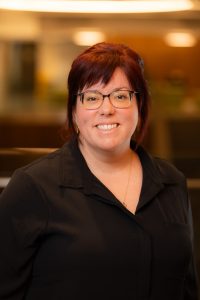
Marie-Pierre Baron is a Professor at Université du Québec à Chicoutimi. Specializing in collaborative research, her expertise is in psychoeducational and remedial interventions with youth experiencing troubles or learning difficulties. For several years, her work has focused on the transitions experienced by Indigenous students and their educational success in postsecondary studies in urban settings. Over time, she has placed differentiated instruction and professional support at the core of her practice.
Nathalie Sasseville Ph.D.
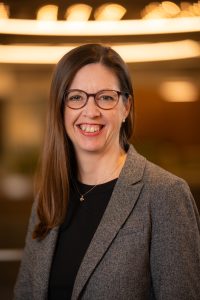
Nathalie Sasseville is a professor at the Université du Québec à Chicoutimi and Director of the University Social Work Clinic. Her areas of expertise focus on Indigenous populations and collaborative research—two fields in which social justice, reconciliation, and the co-construction of knowledge play a central role. Her work is therefore situated at the heart of transforming living conditions, with an emphasis on strengthening the agency of Indigenous individuals and communities.
Over the years, she has carried out several projects related to the success and persistence of Indigenous students in postsecondary education, paying particular attention to structural inequalities, dynamics of exclusion, and the social and community factors that influence educational trajectories. Her research contributes to supporting collective action from the perspective of sustainable social transformation.

